
Throughout the Georgian era, Bath was second only to London as England’s most fashionable town, notable for its spas and its daily promenade along the Royal Crescent and within Beau Nash’s Assembly Rooms. Fittingly, it was in Bath that the 18th-century painter Thomas Gainsborough became one of most celebrated portraitists of his time. A painter of rural origins whose previous work included bucolic landscapes, Gainsborough experienced a renaissance when he arrived in Bath and commenced his practice of what he called the “curs’d Face business” for the spa town’s most fashionable set.
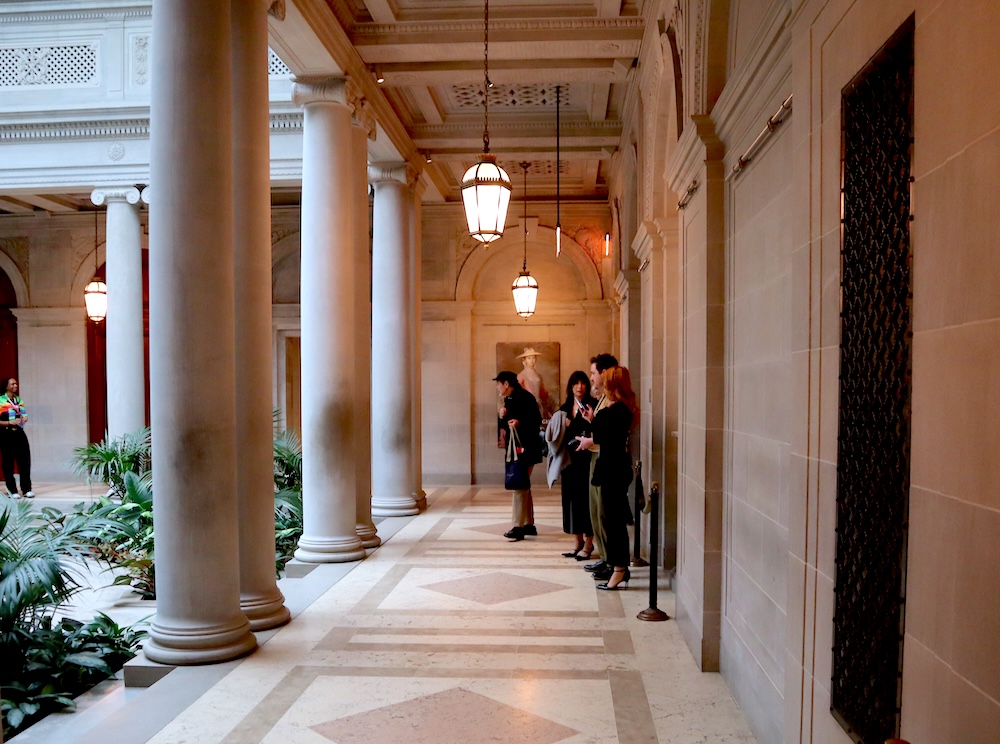
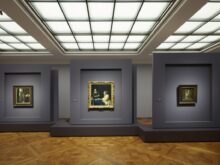
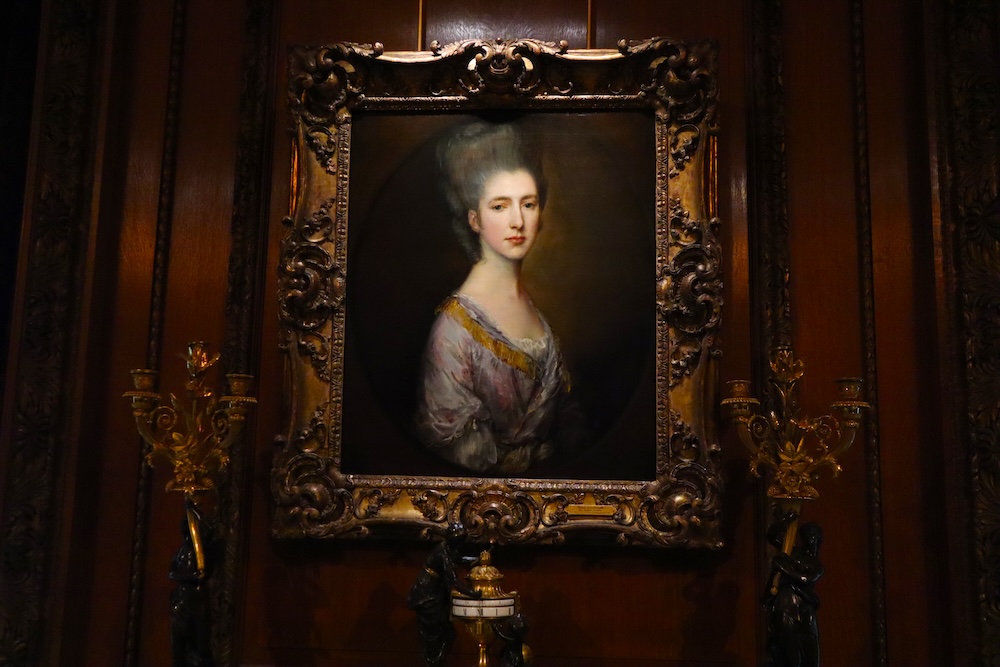
For the first time in New York, Gainsborough’s portraiture has its own exhibition Gainsborough: The Fashion of Portraiture at the Frick where more than two dozen paintings reveal the intersection between fashion, social class, and a sitter’s personality. The Frick’s own collection of ten Gainsborough portraits is amplified by loans from collections across North American and the United Kingdom.
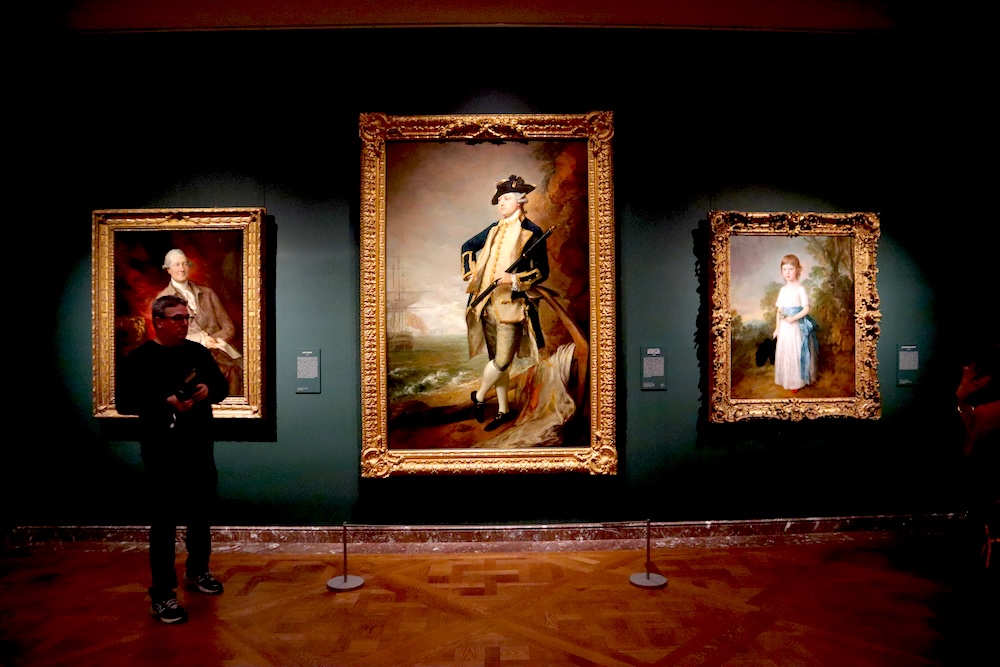
Curated by Aimee Ng, Gainsborough: The Fashion of Portraiture enables an interplay between the various subjects as they side-eye one another in a manner that evokes the social scene in Bath. Gainsborough’s portraits are strewn with details that offer viewers an insider’s perspective on the fashion of the time, as well as the layers of meaning behind the textiles and the trappings of wealth and status. As Ng informs us, Gainsborough’s studio and private showroom in Bath were next door to his sister’s millinery shop, thereby providing Gainsborough’s subjects access to the latest fashions for their sittings.
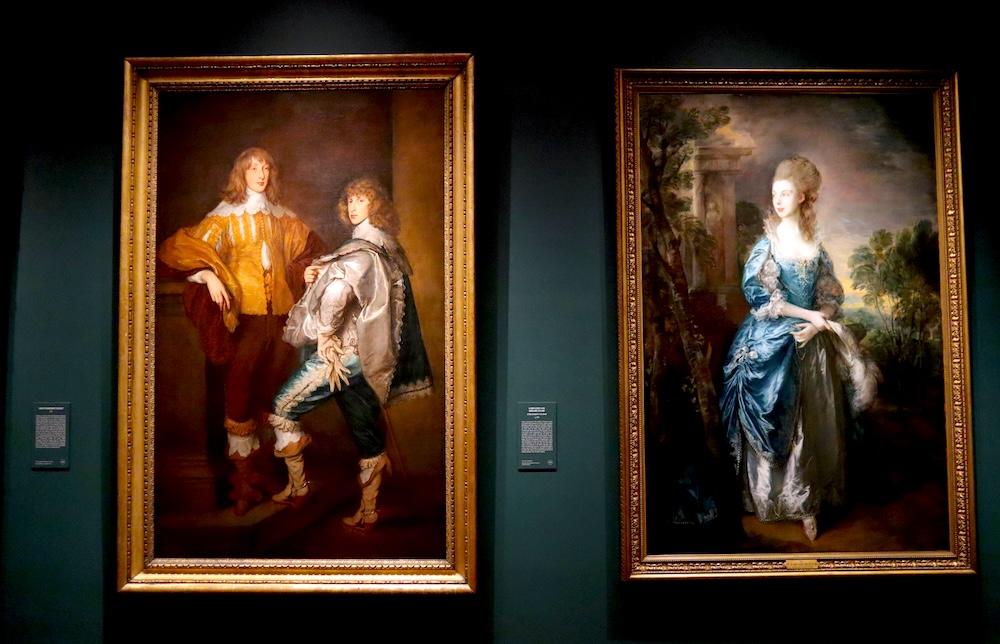
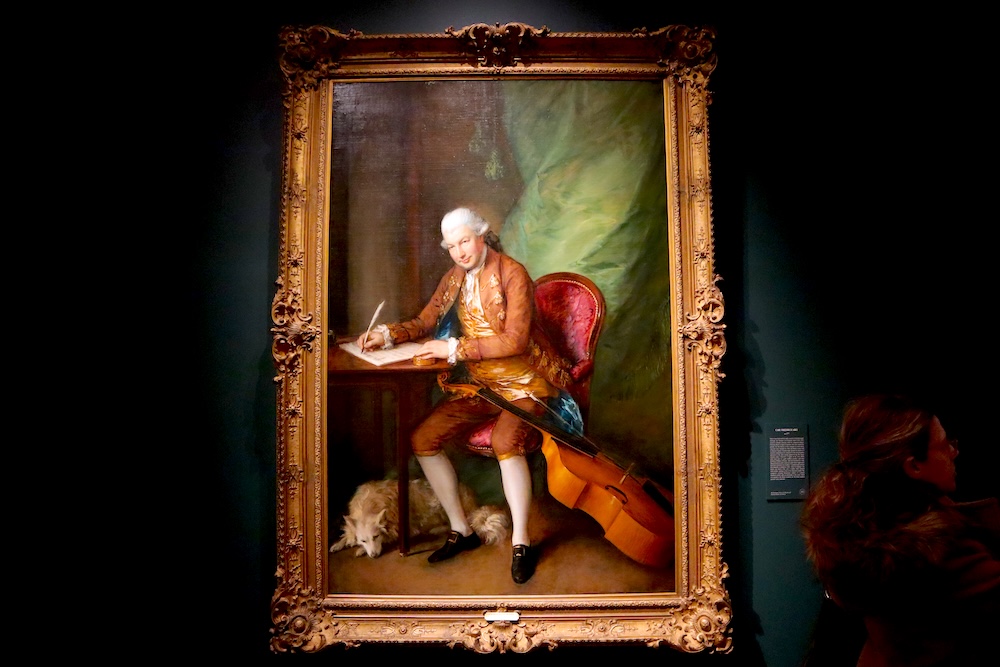
While it is easy enough to dismiss such paintings and portraits as examples of an entitled class that frequently perpetuated injustices upon the less privileged, Gainsborough’s portraits often challenged the hierarchies of the era. Apart from his portraits of the aristocracy and the monarchy, Gainsborough painted actors, musicians, and canines, as well as scandalized women such as the divorcée Grace Dalrymple Elliott who was notorious for giving birth to a daughter whose father was claimed to be the Prince of Wales.
One of the exhibition’s most fascinating paintings is Gainsborough’s portrait of Ignatius Sancho, a Black servant born into enslavement who became a celebrated man of letters and composer, well-known throughout England. Gainsborough painted Sancho in the coat and waistcoat of a gentleman rather than the livery he wore when employed, thereby showcasing his public life as a man of letters and and abolitionist. The portrait of Sancho is Gainsborough’s only known painting of a Black sitter, fitting in that Sancho was also the first Black man to receive an obituary in the British press.
Gainsborough: The Fashion of Portraiture is open through May 25, 2026 at The Frick Collection at 1 East 70thStreet, New York, New York.